
Knowledge
Choosing an event ticketing platform: a map of 4 groups and how to decide by situation
In Vietnam, event ticketing platforms can be sorted into four groups: mass-market ticket marketplaces, self-serve platforms for organizers (such as Tickmi), a form combined with manual bank transfer, and building your own system. No group is best for every event. You choose by three things: who the buyers are, who keeps the brand and the data, and how many people you have to process orders.
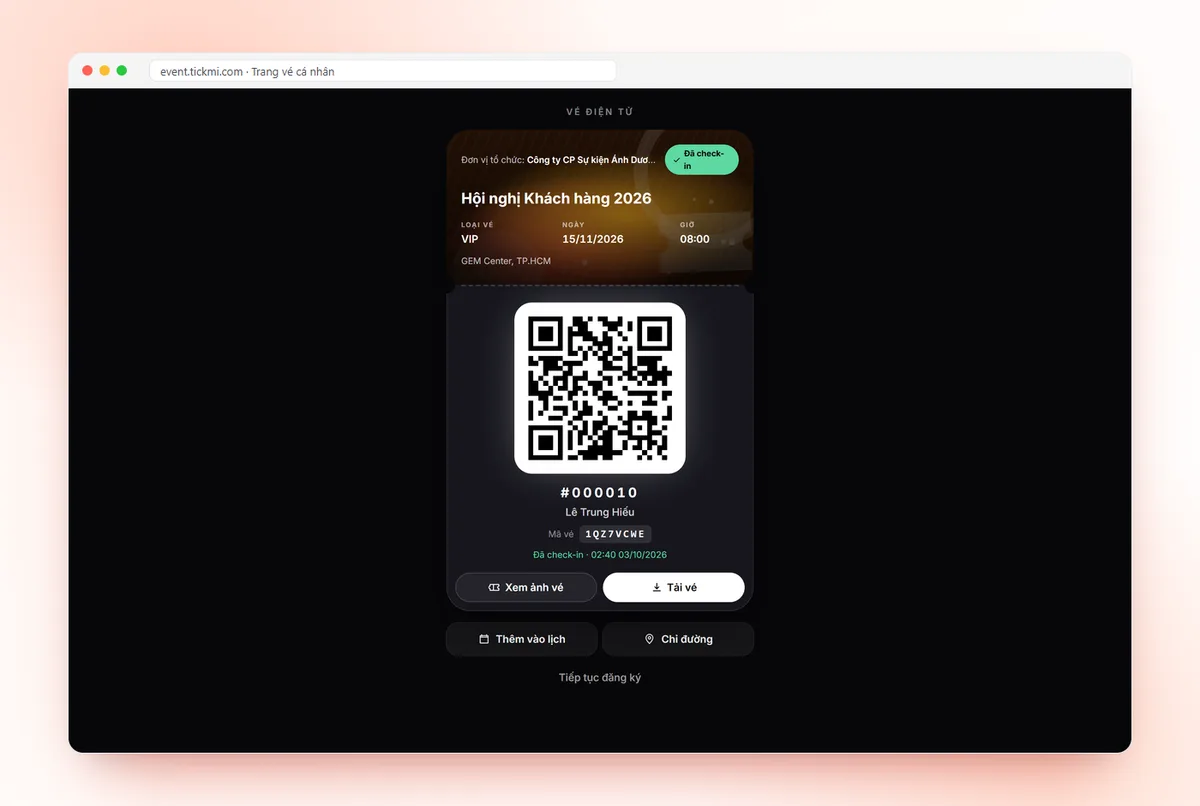
What groups of event ticketing platforms are there in Vietnam?
There are four groups of ways to sell tickets online that event organizers commonly consider. Each group differs in who owns the sales channel, who collects the money and who keeps the buyer data.
- Mass-market ticket marketplaces: one large ticketing site where many organizers list their events. Buyers come to the marketplace, find and buy tickets. The strength is the existing audience; in return, you follow the marketplace's rules.
- Self-serve platforms for organizers: you create your own ticket page and share your own link; the platform handles payment, ticket issuance and reconciliation. Tickmi belongs to this group.
- Form + manual bank transfer: buyers fill in a form and transfer money; you reconcile bank statements and send tickets by hand.
- Build your own system: your IT team builds everything from the sales page to payment and ticket validation.
The first two groups are "use an existing platform", the last two are "do it yourself".
Comparing the 4 ticketing platform groups by situation
The fastest way to choose a ticketing platform is to place your event in one situation in the table below. The table describes general tendencies and does not rate specific providers.
| Situation | Mass-market marketplace | Self-serve platform | Form + bank transfer | Build your own |
|---|---|---|---|---|
| Selling to strangers, needing more people to know about it | Best fit | Possible, if you have a promotion channel | Hard, strangers hesitate to transfer money | You must promote it yourself |
| Selling to a community, members, existing customers | Possible, but the marketplace brand stands out more | Best fit | Possible if orders are few | Only if you already have a membership system |
| A workshop of a few dozen seats, one person handling orders | Possible | Suitable | Sufficient | Not worth it |
| Opening sales to many people at once, limited tickets | Depends on the marketplace's capacity | Suitable if it has ticket holds and queues | Easy to oversell | You must solve the load problem yourself |
| Need tickets with your own branding and buyer data | Depends on marketplace rules | Best fit | You have data but it is scattered | Full control |
| Tickets tightly tied to internal systems (membership cards, your own gate scanners) | Poor fit | Need to ask about data export/import ability | Not suitable | Best fit |
If your event falls into several rows, prioritize the row that causes the greatest damage if done wrong.
When is a mass-market ticket marketplace the right choice?
A mass-market ticket marketplace is the right choice when you do not yet have a buyer base and need to be seen. Buyers are used to looking for tickets on the marketplace, so a new event gets extra reach.
Before listing on a marketplace, ask clearly: can you export the buyer list, whose branding is on the ticket email, on what cycle does the money arrive, and who decides on refunds. Each marketplace answers differently, so read the terms instead of guessing.
Self-serve ticketing platforms for organizers: who are they for?
Self-serve ticketing platforms suit organizers who already have their own following: training centers, clubs, communities, and businesses selling seminar tickets to their customers.
Taking Tickmi as an example for this group, here is what you get when you turn on ticket sales:
- Each ticket type has Open ticket sales, price, Max per order, opening time and Sales close at.
- Buyers order on ticket.tickmi.com, the ticket is held for 10 minutes while they pay via VNPAY, and then they receive a QR ticket by email.
- A virtual queue regulates how many people enter checkout at once when sales open to a crowd.
- You choose Organizer bears the fee or Buyer pays the fee.
- By default only people with the link can buy; turn on Show publicly on Tickmi if you want to appear on the ticket.tickmi.com home page after approval.
- Revenue, reconciliation and refunds are in Tickmi Studio; tickets sold are checked in with the app like regular tickets.
How fees work: an event that sells tickets through Tickmi is charged only the ticket sales fee (a percentage of the ticket price plus a fixed fee per ticket), with no need to buy a package. The fee rate appears right in the ticket sales settings. Detailed steps are in the online ticket sales guide and the guide to revenue, reconciliation and refunds.
Note: Tickmi sells by ticket type, with no seat selection chart and no waiting list.
If your event does not sell tickets and mainly invites and receives attendees, see also Tickmi's event management software.
Form + bank transfer or build-your-own: when is it still reasonable?
Form + bank transfer is still reasonable when orders are few, buyers are people you know and you have someone free to reconcile bank statements every day. The article accepting bank transfers or a payment gateway when selling tickets helps you decide on the payment-collection part alone.
Building your own is reasonable when tickets are tightly tied to your core systems or data must not leave your internal infrastructure. The hard part usually lies in payment, reconciliation and ticket validation, not the sales page. Read more in building your own ticketing system or using an existing platform.
How to choose an event ticketing platform: 5 steps
The decision on a ticketing platform should start from the buyer and the risks, and only then move to features. Five steps:
- Write down who the buyers are. Strangers lean toward a mass-market marketplace; an existing community leans toward a self-serve platform.
- Estimate the sales-opening peak. If tickets are limited and many people buy at once, consider only platforms that hold tickets during payment.
- Ask about money. Who bears the fees, on what cycle does money arrive, how are refunds handled. The detailed fee table is in the types of fees when selling tickets online; for tax, ask your accountant.
- Ask about data and branding. Can you export the list of orders and attendees, and in whose name is the ticket email sent.
- Buy one low-priced test ticket. Go through the whole flow: order, pay, receive the email, scan the ticket at the gate, then try a refund request.
Hypothetical example: a training center sells 80 seats for a workshop, with buyers mostly past students who follow its fanpage. Step 1 points to a self-serve platform; step 2 shows that ticket holds are needed; step 5 reveals that the ticket email lands in Gmail's Promotions tab, which is fixed before sales open. If you need to score more carefully, including check-in, use the criteria table for choosing ticketing and check-in software.
How to open sales for online event tickets on Tickmi, from creating ticket types to tracking orders, is on its own page.
Common mistakes when choosing a ticketing platform
| Mistake | Consequence | How to avoid |
|---|---|---|
| Comparing only the fee per ticket | Ignoring reconciliation time, refund costs and the payout cycle | Compare the whole money process: collect, reconcile, refund |
| Starting with form + bank transfer for a big event | Overselling, late tickets, buyers become suspicious | Use a platform with ticket holds when tickets are limited |
| Not asking about buyer data | No list to re-invite next time | Ask clearly about list export rights before listing |
| Selling tickets in one place, checking in in another | Moving lists by hand, easy to mismatch refunded tickets | Choose a platform with both ticket sales and check-in |
| Not writing a refund policy from the start | Disputes when buyers change their mind | Put the policy on the sales page, see ticket refund policy |
If your event does not sell tickets and only issues invitation or registration tickets, Tickmi charges by event package (by maximum number of attendees) or by ticket issuance quota package; you can start with 100 free ticket issuance quota, see the pricing page. An overview of the ticket sales solution is on online ticket sales with Tickmi.
About Tickmi
Tickmi is a ticketing and attendee experience platform (Ticketing & Participant Experience Platform). On a single, unified set of attendee data, Tickmi connects the whole journey: issuing invitation, registration and paid tickets, sending branded QR tickets, checking in with the app, kiosk or scanner, even when the network is down, then the welcome screen, lucky draw, voting, quizzes and surveys. Tickmi is trusted by organizations such as Viettel, VNPT, MobiFone, FPT and CMC. Learn about Tickmi or try it free.
Frequently asked questions
Which event ticketing platform is best in Vietnam?
No platform is best for every event. A mass-market marketplace suits reaching strangers; a self-serve platform like Tickmi suits when you already have a community and want to keep your brand and data; form + bank transfer only suits few orders.
How is a mass-market marketplace different from a self-serve platform?
On a mass-market marketplace, buyers look for tickets in the marketplace's shared catalog. With a self-serve platform, you share your own sales page link and manage orders and attendees yourself, while the platform handles payment, ticket issuance and reconciliation.
Do I need to buy a package to sell tickets through Tickmi?
No. Events that sell tickets through Tickmi are charged only the ticket sales fee, made up of a percentage of the ticket price and a fixed fee per ticket. The rate applied to your organization is shown in the ticket sales settings, and you choose whether the organizer or the buyer pays the fee.
Should I sell tickets with Google Form and bank transfer?
It works if orders are few and buyers are people you know. When tickets are limited or many people buy at once, this approach easily oversells and costs effort to reconcile statements; a platform that holds tickets during payment is safer.
Does Tickmi have a seat selection chart when selling tickets?
No. Tickmi sells by ticket type, each with its own maximum number of tickets, price and sales window. If your event needs buyers to pick their own seats, choose a tool with a seating chart.
Issue QR tickets, send emails, check in and engage attendees on one platform.